What’s Wrong With Identity Politics?

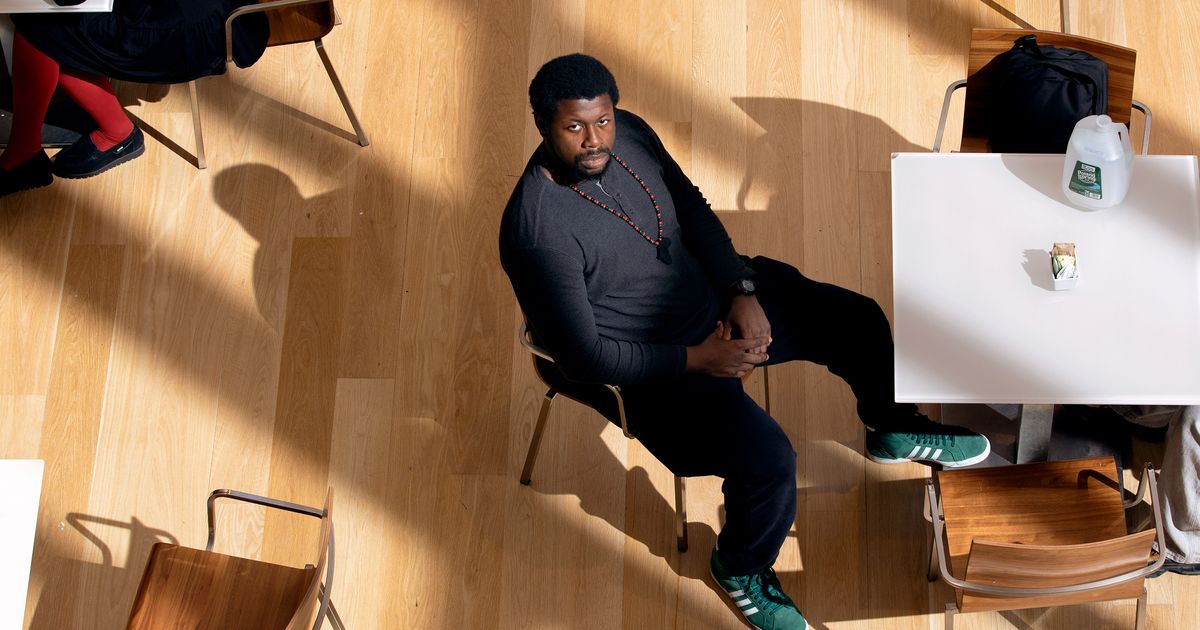
The concept of a new book by philosopher Olúfemi O. Taíwò is taken from an elite power broker.

Photo: Eliot Jerome Brown Jr.
Photo: Eliot Jerome Brown Jr.
This article appears in the New York News Bulletin , One Great Story . Sign up here to receive every night.
When Olufemi O. Taivo graduated from Indiana University, he and his parents traveled to their home country of Nigeria to bury their grandfather in the southwestern city of Abeakuta. Tourists hire convoys and armed guards to get to the family compound where they will be staying. “At the time, it was the worst poverty I had ever seen,” 32-year-old Taiwa told me. He spent most of the night nauseous - he thought he had malaria - and was shocked when he woke up in the air. Gunmen stormed the compound, and Taiwan's father threw him off the bed in a futile attempt to escape. The family was detained for several hours while the thieves searched for goods and cash.
No one was hurt, but the size of the experience. For Taiwa, who is now a professor of philosophy at Georgetown University, the boundaries of an attractive personality become clear as his family walks through car windows and jewelry past a brilliant beggar. "If I introduced myself to a Nigerian American, I wouldn't lie," he said. But I will say something deceptive, by saying: "I am the representative of all these people."
On May 3, Taiwo also published his second book, Elite Tutma. It discusses mixed ways of using the idea of identity in American political culture. The idea of capturing elites has been around for decades and generally describes how the most privileged people in a group take control of privileges for all – for example, how a leader in a developing country can use foreign aid money. Put in his pocket. Taíwò's novelty relates to this concept of personal politics, which was developed in 1977 by the black radical feminist Combahee River Collective. He claims their project was stolen. "We believe that the deepest and perhaps most extreme principles come directly from our own identities," they wrote, "because it would be better for all the oppressed to regulate what is good for people according to social classification." However, instead of using personal identity as a starting point for forming radical alliances, as these inventors suggest, elites use it as a tool to promote their own narrow interests.
He cited a recent example: Washington Mayor Muriel Bower filmed CIA videos in the streets days after police brutality against protesters in 2020 for portraying black lives as important. Attracting new recruits, for example, by attracting foreigners. Both are attempts to quell dissent or change the image of violent organizations using symbols of personal policy.
Photo: Eliot Jerome Brown Jr.
Taíwò is a comfortable and unprecedented communicator who takes long breaks to find the clearest way to express himself. The characters are very useful for understanding our inflection point. The past few years have been turbulent because of Obama's departure from the White House and the emergence of Donald Trump as a proponent of thinking about personality and opening new avenues for how it shapes experiences. One consequence is the reduction of easily branded content that supports social movements – Negro lives matter , the George Floyd rebellion and I – for all its benefits. The abuse of identity politics has forced Nancy Pelosi to wear urban clothing, but she rarely struggles with real inequality. So the Taiu project is restoration. “This is a starting point,” he said of using the original concept. "It's perfect for addressing common issues with people from other groups."
These differences are unique in their place of origin. Born in 1990, Taiwa and his family moved from the San Francisco Bay Area to the northern suburbs of Cincinnati, where his parents enrolled in graduate school in the early 1980s. His mother worked in pharmacology at Procter & Gamble, and his father was an educational engineer who was at home caring for his first child, an autistic older brother in Taiwan. The physical landscape is in stark contrast to their first home in America – the chain stores, malls and other symbols of the white suburban wealth that replaced the mother and pop stores of Auckland and Black Power Echo – but socially more complex than the closely knit Nigerians. Emigrant community.
In Elite Capture Taiwan only mentions his personal experience of violence. (Abecuta's history is not shown.) However, his upbringing is deeply rooted in the fact that the genocide in the form of the 1966 Igbo program that led to the Nigeria-Biofra war between 1967 and 1970 was a refuge. . The memories of many people grew up around him. Their personal experiences and sufferings, as you might call Nigerians, don't automatically make them wise, benevolent, or heroic - say nothing to call them their natural organs of dominion over a just world to come. "There are people with anger and other mental control issues," he said. "There are cases of violence, especially against children."
As a result, fashionable appeals such as "listen to the most vulnerable" or "focus on the most marginalized" have become widespread in academia and the left and have penetrated the corporate world, and "never sits well" in the halls of congress. With me,” wrote Taya. When people tell him, "Usually it's not because they want to Skype calls to refugee camps or work with the homeless." Rather, it is a largely well-meaning but empty gesture of respect for marginalized people in elite positions on campus or in government.
Photo: Eliot Jerome Brown Jr.
This model is considered erosive both personally and politically. “There are meanings that I can never take seriously,” says Taiwa . The emphasis on material factors is one of the hallmarks of his work, climate, colonialism and slavery.
He also singled out those on the left who did not see personal identity as the only carrier of discrimination or openly denied its relevance. "In a world where 1.6 billion people live in inadequate housing (slum conditions) and 100 million people are homeless, a completely different approach is needed to work on the concept of the 'most marginalized'," he wrote. "You should at least leave the room for such a position."
But what would a different approach look like? Taívo proposes “constructive policies” – focusing on tangible results. According to him, this means a redistribution of wealth and power to those who suffer the most from stagnation. This may seem common enough, and Táíwò stands at the forefront without offering any guidance on how to be equal. He wrote Elite Capture to help progressives become more knowledgeable and wise, both in terms of leadership and rank. But he noted that residents of Flint, Michigan, are beating local authorities with their allies across the country to solve the water crisis — an example of a concerted effort through personal threats. "Right now, all they need is not to 'write', 'central' or translate their stress into current academic language," Taiu wrote. - The citizens of Kremen urgently need, first of all, to lead from the water.